Why Mention Water Fluoridation?
 Patients rely on your advice to live healthier, longer lives. That is why it is vital to discuss how oral health and water fluoridation can help them do just that. Here are tools for health professionals with corresponding handouts for families!
Guides for Health Professionals and Parents/Caregivers
- Fluoride Safety: A Guide for Health Professionals
 (Spanish )
A concise explanation of the regulation and safety of fluoride additives and fluoridated water. Common concerns, including daily intake and infant formula, are addressed. Links to valuable resources are provided. - Fluorosis Facts: A Guide for Health Professionals (Spanish )
Gives health professionals a quick, thorough understanding of dental fluorosis and includes photos, follow-up resources, and suggestions for counseling on prevention. - Say This, Not That: Tips for Talking about Community Water Fluoridation (Spanish )
Designed to help health providers address technical, challenging questions with comfort and ease. Addressing many of the most common concerns, this tool offers discussion-friendly responses in a clever graphic format. - Common Questions about Fluoride: A Resource for Parents and Caregivers (Spanish )
Explains the importance and safety of fluoride in a question and answer format. A companion to Fluoride Safety: A Guide for Health Professionals, this handout lets your patients leave the office with accurate fluoride information in hand. - Fluorosis Facts: A Resource for Parents and Caregivers (Spanish )
Explains sources of fluoride, dental fluorosis, and gives parents stepwise guidance on preventive oral health care. A companion to Fluorosis Facts: A Guide for Health Professionals, this handout lets your patients leave the office with helpful information in hand.
Community Water Fluoridation/Oral Health Posters
- Why Do Children Need Fluoride? English: PDF | JPG; Spanish: PDF | JPG
- Fluoride: Cavity Fighter English: PDF | JPG; Spanish: PDF | JPG
- Strengthen Your Body, One Glass at a Time English: PDF; Spanish: PDF
- Oral Health Equity Begins with Community Water Fluoridation English: PDF; Spanish: PDF
- Teach Them to Brush and Floss English: PDF; Spanish: PDF
Additional Resources
When talking to your patients about oral health and fluoridation, here are a few key points to make:
When talking to your patients about oral health and fluoridation, here are a few key points to make:
- Brush twice a day with fluoridated toothpaste
- Floss daily
- Cut down on snacks, especially those that are high in sugar or starch
- Get regular check ups
- Drink fluoridated water
What Respected Organizations And Experts Say About Water Fluoridation
Nevada State Medical Association
“… the NSMA and its component medical societies support legislative efforts to promote community water fluoridation at optimal levels to decrease the incidence of dental caries.”
Popular Resources
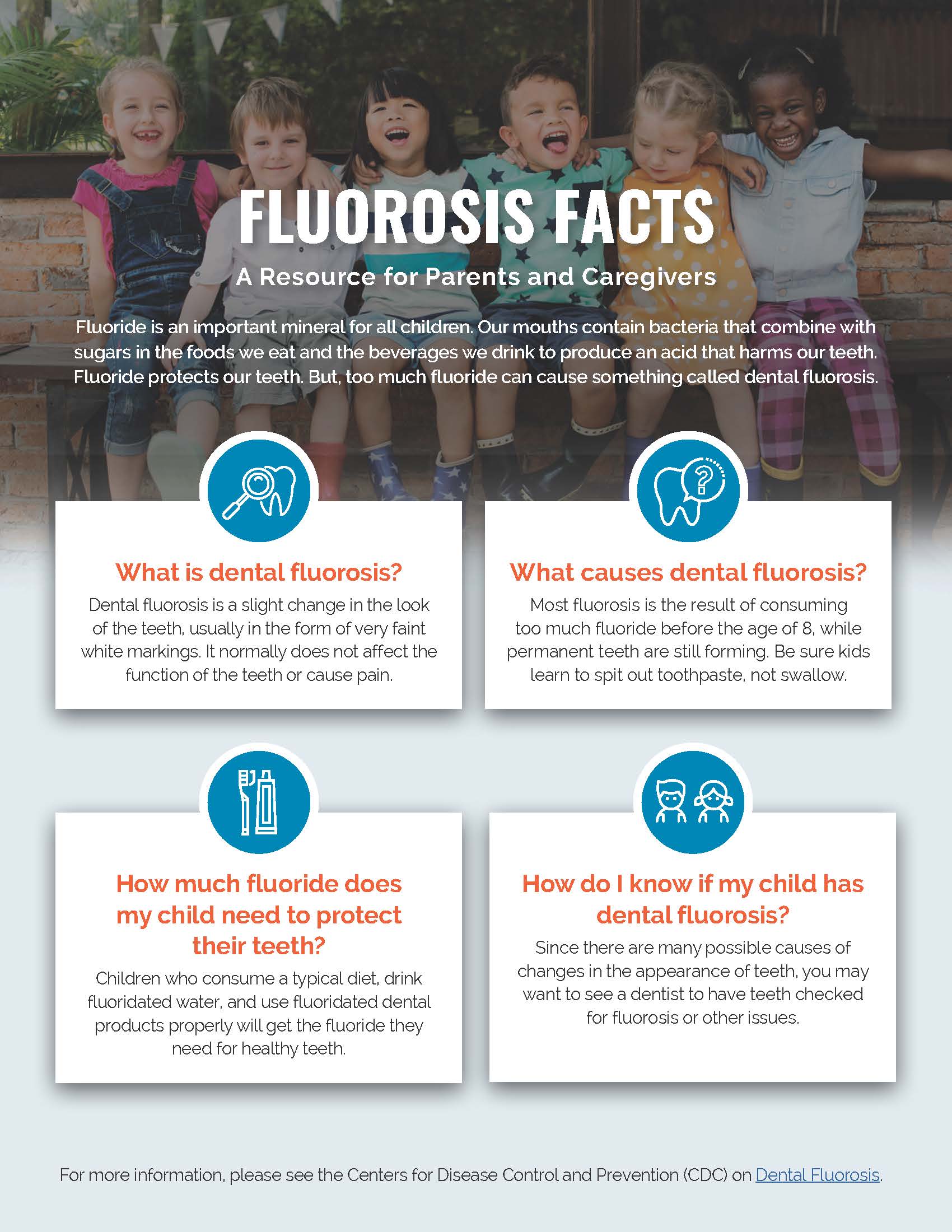
Fluorosis Facts: A Resource for Parents and Caregivers
Explains sources of fluoride, dental fluorosis, and gives parents stepwise guidance on preventive oral health care
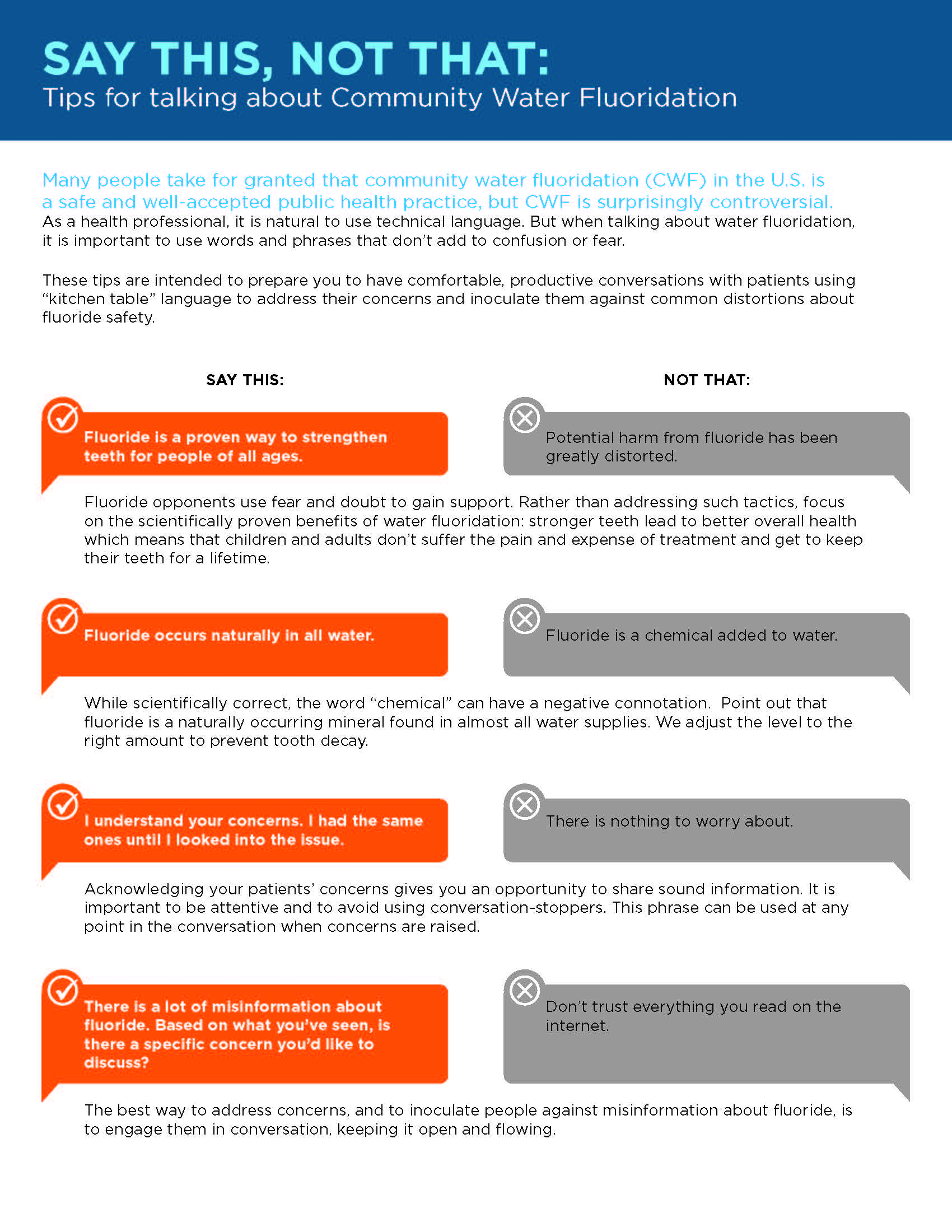
Say This, Not That: Tips for Talking about Community Water Fluoridation
Offers discussion-friendly responses to fluoride concerns in a clever graphic format
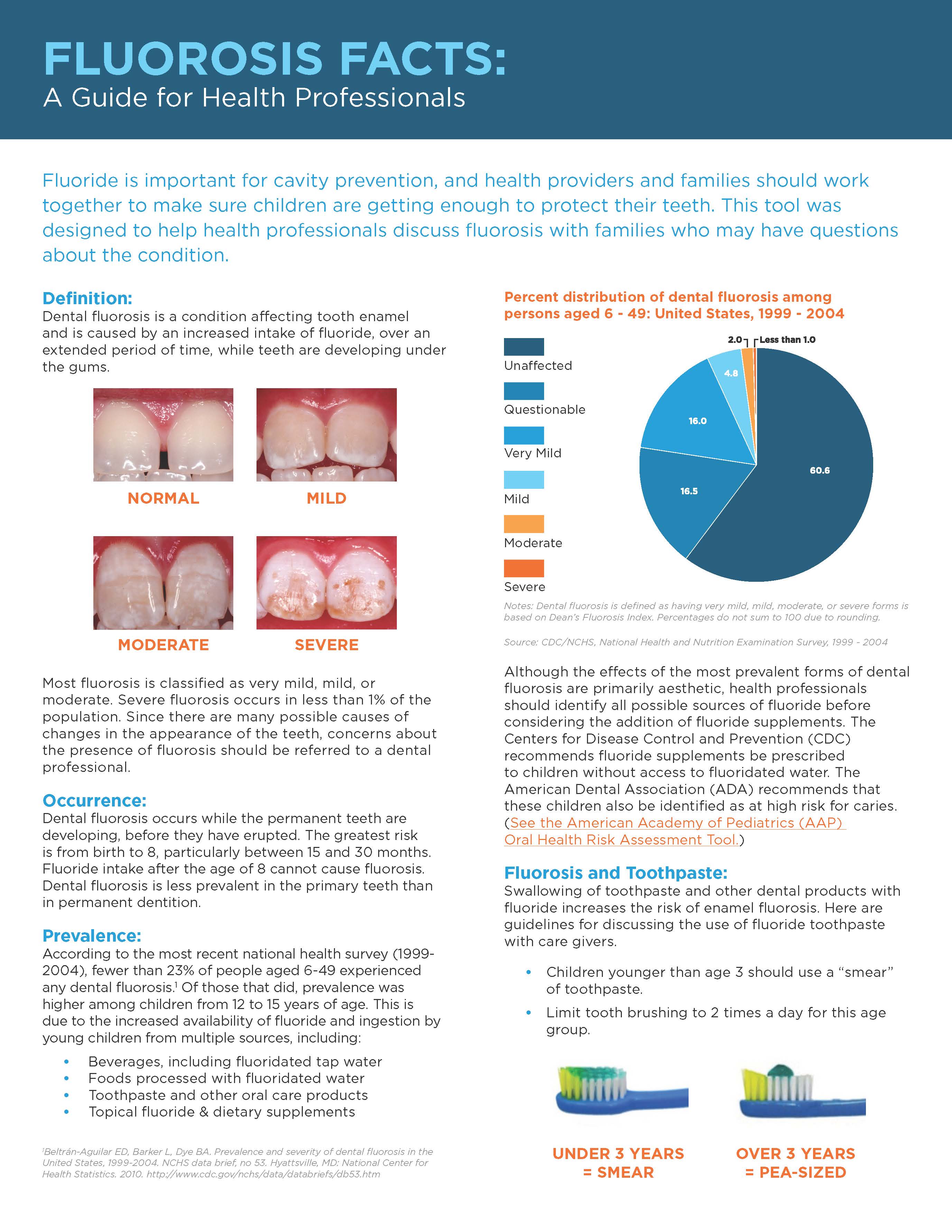
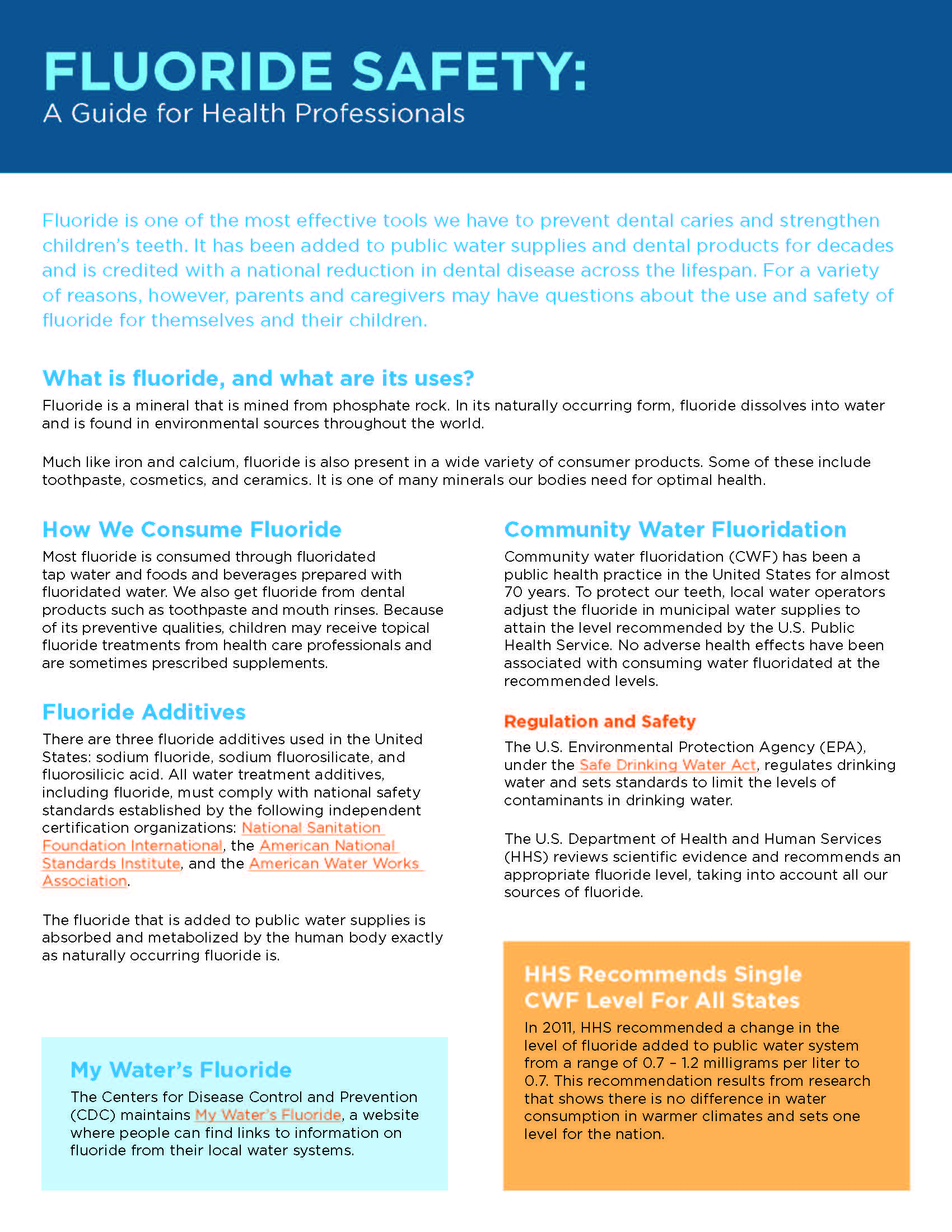
Fluoride Safety: A Guide for Health Professionals
Explanation of the regulation and safety of fluoride additives and fluoridated water

Policy and Information from America's Leading Scientific and Consumer Advocates.
“Research shows that community water fluoridation offers perhaps the greatest return-on-investment of any
dental care strategy.”
— Pew Charitable Trusts